
BOMBAY: A CULINARY MEMOIR
Where Cinema Fades, Memory Simmers.
Status: Currently in Post-Production
🎬 ONGOING PROJECT UPDATE
Bombay: A Culinary Memoir is currently in Post-Production. We are currently weaving together rich atmospheric visuals, rare archival records, community interviews, and an evocative original score to bring this century-old story to life on screen.
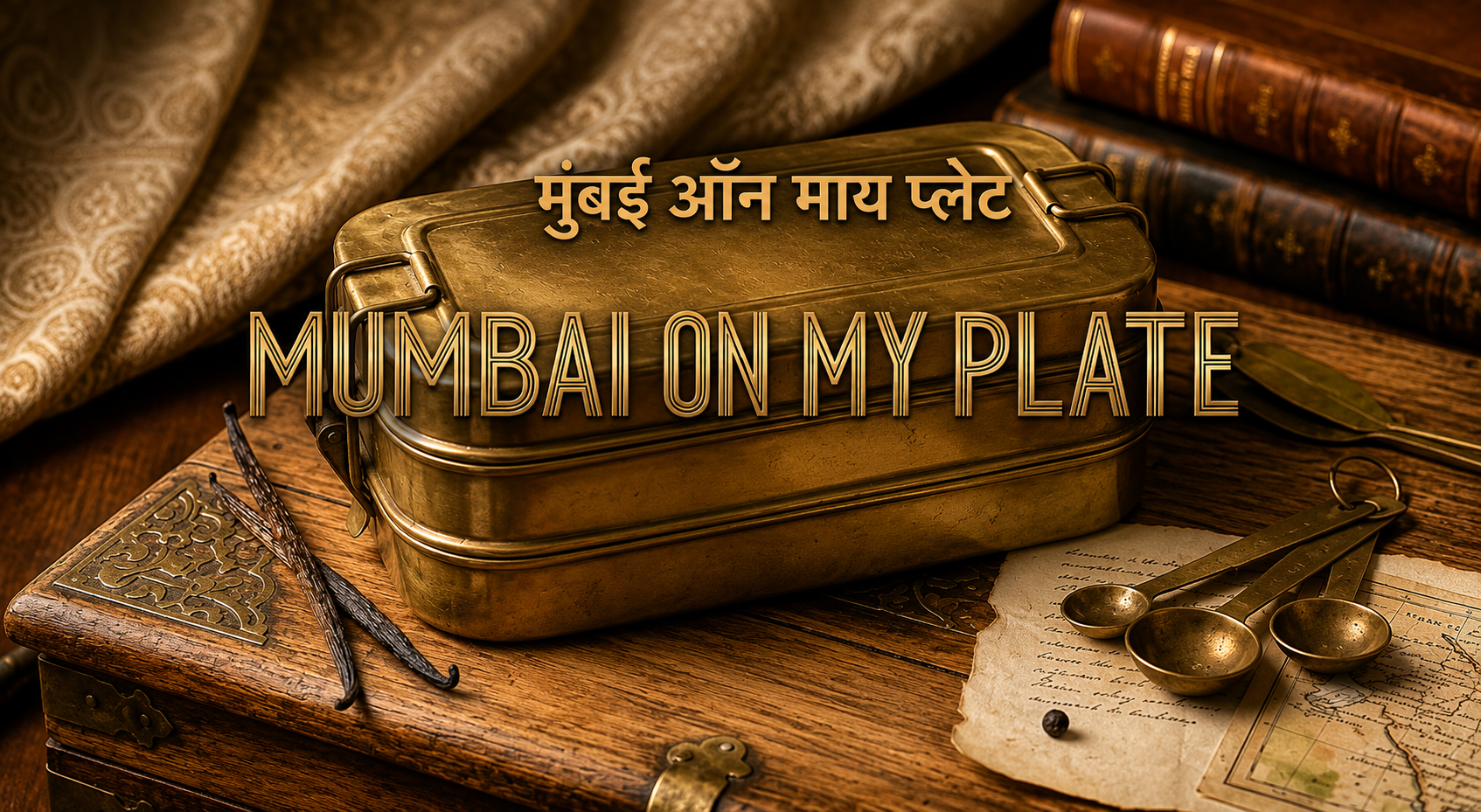
Mumbai On My Plate is a 60-minute docu-fiction feature exploring the intersection of cinema, memory, and urban anthropology—told through the rare, coastal flavors of Mumbai’s original settlers.
[ Watch First-Look Teaser ]
Mumbai On My Plate is currently in Post-Production. We are currently weaving together rich atmospheric visuals, rare archival records, community interviews, and an evocative original score to bring this century-old story to life on screen.
This is not a food film.
It is a film about access.
In a world saturated with culinary content—where everything is plated, performed, and instantly shareable—I found a cuisine that resists visibility. The Pathare Prabhu food tradition does not exist in restaurants, cookbooks for sale, or digital archives. It survives only within homes, sustained through trust, memory, and invitation.
That is what makes this story urgent.
I did not arrive here as a documentarian with a brief. I arrived as an outsider. What began as a personal relationship slowly became rare access—into kitchens, into families, into a cultural space that is not easily opened to the camera.
At the centre of the film is Grihini Mitra, a century-old cookbook passed down to women at marriage. It is not followed—it is interpreted. It evolves across generations, carrying within it the imprint of migration, colonial influence, and time. This book became my entry point into understanding how culture survives—not through preservation, but through practice.
The film is driven by two parallel journeys. One is my own—of finding belonging in a city that initially offered none. The other is Unmesh Kirtikar’s return from the United States after eight years, reconnecting with family and carrying this culinary legacy across continents. Through him, the film expands beyond geography into questions of diaspora, memory, and identity.
Visually, the film rejects spectacle. It is intimate, observational, and immersive. The camera does not explain—it witnesses. It allows the audience to experience what it means to be present in these spaces, rather than being guided through them.
What makes this film platform-relevant is its exclusivity.
This is not a story that can be replicated.
This cuisine cannot be accessed.
This world cannot be staged.
It had to be entered—and earned.
Bombay: A Culinary Memoir offers audiences something rare: not just a new cuisine, but a new way of seeing a city they think they know.
And at its core, it asks a simple question—
What does it mean to belong?
Key Pillars
● Gastronomy as a Living Archive
Recipes aren’t just instructions—they are historical records. The film reveals how spice blends, cooking techniques, and ingredients carry the weight of centuries of migration and adaptation.
● The First Settlers
A spotlight on the Pathare Prabhu community, one of Bombay’s earliest indigenous inhabitant groups whose rich cultural footprint and distinct culinary heritage are often overshadowed by the modern expanse of Mumbai.
● An Urban Anthropology Text
Through a 100-year-old cookbook, the city’s concrete landscape dissolves into forgotten coastal pathways, family heirloom kitchens, and stories passed down by word of mouth.
Project Snapshot
|
Feature |
Details |
|
Format |
Docu-Fiction Feature |
|
Runtime |
60 Minutes |
|
Primary Location |
Shivaji Park, Mumbai, India |
|
Production Phase |
In Post-Production (Editing, Sound Design & Color) |
|
Target Release |
Film Festival Circuit |
Director’s Note Excerpt
“I came to Mumbai looking for stories on 35mm film, but I found the most enduring narratives written on oil-stained handwritten pages in a Shivaji Park kitchen. As we assemble this edit, this film stands as an homage to the city that feeds our dreams, and the quiet community that fed the city first.”
For co-production, distribution inquiries, festival programmers, or press requests, please contact the production team.
THE FILM’S DEEPER QUESTION
At its heart, Bombay: A Culinary Memoir asks:
Can cuisine survive when the culture that created it begins to disappear?
And perhaps an even more uncomfortable question:
What happens when the last person who remembers a recipe is gone?
The film does not necessarily need to answer these questions.
It needs to make us feel their urgency.
Bombay: A Culinary Memoir sits at the intersection of several contemporary festival conversations:
Food & Culture
Cuisine as a carrier of cultural memory.
Urban Anthropology
A community’s history as a way of reading a rapidly transforming city.
Intangible Cultural Heritage
The preservation of knowledge that exists primarily through practice and memory.
Migration & Identity
How communities retain identity through adaptation.
Gender & Domestic Archives
The largely invisible role of women in preserving cultural knowledge.
Cities & Memory
The relationship between disappearing landscapes and living traditions.
Personal Documentary
A filmmaker’s transformation from observer to participant.
WHY THIS STORY MATTERS NOW
The film is ultimately not only about the Pathare Prabhu.
It is about what cities everywhere are losing.
As global cities become increasingly homogenised, small communities are left negotiating a difficult question:
How do you remain yourself without becoming a museum piece?
The Pathare Prabhu kitchen offers one answer.
You cook.
You share.
You adapt.
You remember.
And you pass it on.
THE FINAL IMAGE
The film could end quietly.
Not with a grand historical conclusion.
But with a kitchen.
A younger member of the community attempts to recreate a dish from Grihini Mitra.
The old book lies open beside the ingredients.
An older generation watches.
Perhaps there is disagreement over the recipe.
Perhaps the younger cook does something differently.
The older person tastes it.
A pause.
A smile.
“Almost.”
The book remains open.
The cooking continues.
Outside, Mumbai keeps changing.
Inside, something has survived.
CUT TO BLACK.
BOMBAY: A CULINARY MEMOIR
Some cities are remembered by their monuments.
Bombay is also remembered by what it cooks.